
MUSIC

"STELLA" , LP Vinyl
The album “Stella 99” traces the journey of the eletric guitar (Stella 99) with the serial number 23523 “on the run in various geographies” since the end of the Cold War.
Over the last four decades, this guitar has been stolen, traded, sold, disassembled, rebuilt, and found in different parts of the world.
In fact, “Stella 99” is a metaphor intended as a tribute to nameless refugees, those displaced by war, populations subjugated by totalitarian systems around the world, victims of slavery. All those who suffer from being sold, robbed, and cheated in search of a better life or who are simply alone or trapped by fear.

“LOUISVILLE”, Gatefold Vinyl with 48 pages booklet
Under the motto “Art is crime prevention”, the limited edition “Louisville” deals with the American political, social and economic reality through music, photography, texts and illustrations.
Based on a reportage by Pedro Sousa Pereira and photographer Mário Cruz (www.mario-cruz.com) in the United States, 2020, the edition focuses, among others, on issues of racism, violence caused by the use of firearms and economic issues.
The interviews and the sounds recorded in various states from the South to the North of the United States (from Florida to Pennsylvania) were handled by Portuguese musicians and the themes are presented on a vinyl record.
The musicians who participate are: Óscar Pinho; Guilherme Lucas; Luís Vaz Patto; Francisco F. Cerqueira, and the bands LÖDO (Luís Vaz Patto, Hélder Pachorro and Luís Antero); Thee Magnets (Carlos Moura, João Calheiros and Maurício Mau Mau) and Crystal Cabinet. The proceeds from this edition go to the organization "Jail Guitar Doors" founded by musician Wayne Kramer in Los Angeles, USA.
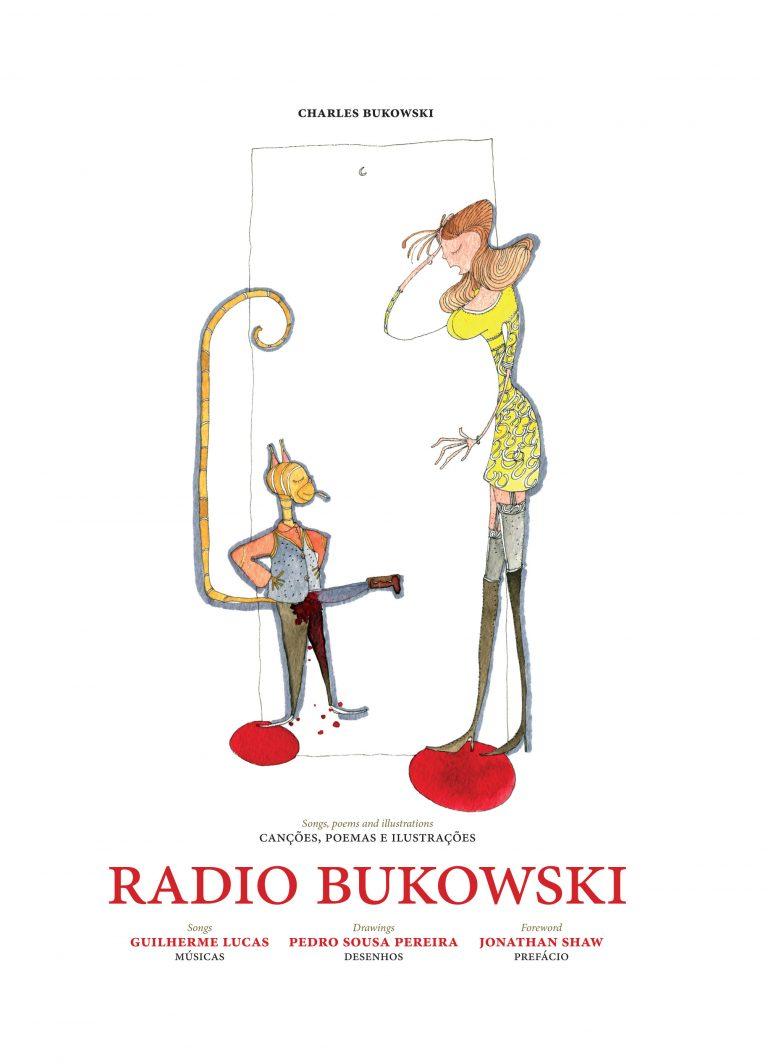
RADIO BUKOWSKI, hardback book with CD (Portuguese / English bilingual edition) 48 pages
CHARLES BUKOWSKI needs no introduction! The literary legacy forged by his innovative character, “gonzo” is widespread and indisputable.
An author who writes with an intensely autobiographical style, Bukowski spent his entire life dreaming of gaining recognition for his work as a writer. His aggressive, uncomfortable, most often drunken, writing was done as he sat at his typewriter, letting his thoughts flow uncensored and with surprising subtlety.
Bukowski lived in a tormented, distorted world; an absolute outcast who subverted the standards imposed by the society of his time. The writer never insisted on hiding that his works were, almost always, autobiographical.
His lack of discretion was, in fact, so great that, throughout his life, he would face the dissolution of his friendships. Unconcerned, he would cite the names of the people who surrounded him, and, when particularly inspired, make harsh criticisms of those same people. Repulsion, disgust, hatred, love, passion and melancholy. Those are a few of the feelings that most inspired Charles Bukowski, who spent his life in the alleyways of the United States, composing his entire oeuvre. Each poem, novel and short story written by the author carries another piece of the life of the “dirty old man”, as he became known internationally.